


On July 1, the Centers for Medicare and Medicaid Services (CMS) launched a temporary program to cover GLP-1 agonist drugs for obese Medicare beneficiaries. The program is called the Medicare GLP-1 Bridge and will allow eligible beneficiaries to access the drugs for a $50 monthly copayment.
The program is slated to run from July 2026 through the end of 2027 and is established through the Section 402 demonstration authority. KFF reports that the Bridge will provide coverage of three GLP-1 drugs offered by drugmaker Eli Lilly & Co. (Lilly). Eligible beneficiaries must be enrolled in Medicare Part D, though the program will operate outside of the Part D framework and copays will not count towards the Part D deductible or out-of-pocket spending cap.
To qualify, Part D enrollees must have a body mass index (BMI) of 35 or more; or, a BMI of 30 with heart failure, uncontrolled hypertension, chronic kidney disease; or, a BMI of 27 and pre-diabetes, prior myocardial infarction, stroke or symptomatic peripheral artery disease. KFF notes that in 2023, more than 13 million Medicare beneficiaries met the BMI thresholds, but not all of them would have been potentially eligible.
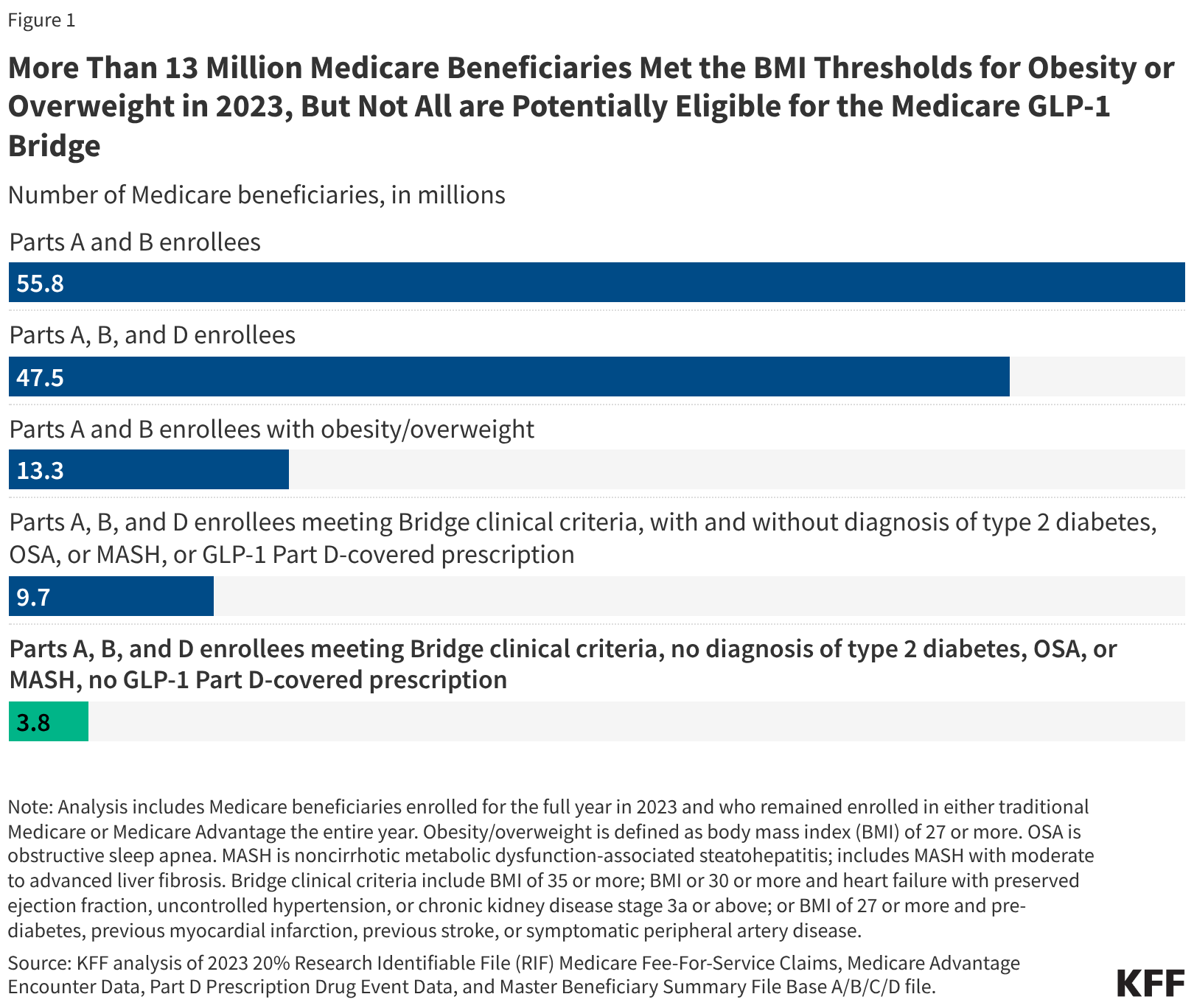
Its not yet known whether or how the Medicare program will continue coverage after it’s pilot and participants may be faced with an expensive medical choice in 2028. Additionally, the Washington Post notes that the coverage is not automatic, but subject to prior authorization through the insurance company contracted for the project, Humana.
From Stacie B. Dusetzina:
When it expires, it is unclear how beneficiaries will access GLP-1 medications at an affordable price. The Bridge program could result in substantial additional governmental and beneficiary spending without providing longer-term health benefits.
Previously, the Trump administration had announced a successful negotiation with drugmakers Lilly and Novo Nordisk with the aim of agreeing to lower prices in exchange for higher sales volume. STAT reports that President Donald Trump’s team of negotiators landed on a monthly price of $245 in November for Medicare and Medicaid enrollees, but the price was contingent on private insurers agreeing to cover the drugs for all uses, with a $50 copay through a pilot program called BALANCE. In the end, insurers refused and thus Bridge was born. From Dusetzina:
The most obvious concern is that potential savings associated with a lower negotiated price for all GLP-1 fills in Medicare Part D will not be realized. Instead, the Bridge will provide access to GLP-1s for expanded indications without any new price concessions for existing use.


Leave a Reply
You must be logged in to post a comment.