

Arizona is preparing to impose new Medicaid work requirements on some adults, raising concerns that the state could face another difficult rollout of public-benefit reporting rules after recent changes to the Supplemental Nutrition Assistance Program.
Under the One Big Beautiful Bill Act of 2025 (OBBBA) beginning Jan. 1, 2027, certain adults covered through the Affordable Care Act’s Medicaid expansion will have to document at least 80 hours a month of work, education, community service or other qualifying activities, or demonstrate sufficient income or an exemption, according to AHCCCS.
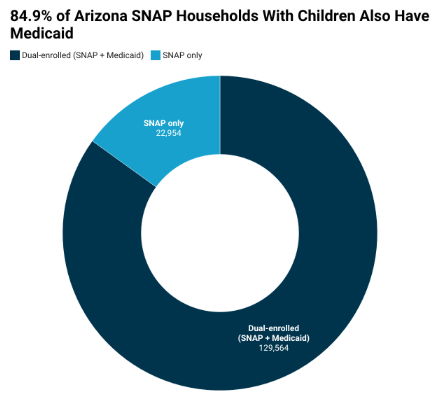
The potential overlap with SNAP certification is significant. The Arizona Center for Economic Progress, citing Census data, reports that nearly four out of five Arizona households receiving SNAP also include someone covered by Medicaid. The group estimates that amounts to roughly 233,000 Arizona households.
The center argues that Arizona’s experience implementing new SNAP requirements offers a warning for AHCCCS, noting that nearly half (450,000) of Arizona’s SNAP participants have lost their food assistance since July 2025, including roughly 180,000 children after federal changes expanded SNAP work requirements and imposed new eligibility-verification responsibilities. Most of those same Arizona families have children covered by Medicaid.
A study published in JAMA Health Forum found that nearly one in five potentially affected adults in Medicaid expansion states could be at risk of failing to meet the federal work requirement because their hours are near the threshold or fluctuate. The researchers found the risk was particularly relevant for workers with unpredictable schedules.
Physician groups are raising concerns about the administrative burden. The American Medical Association (AMA) has urged the Centers for Medicare & Medicaid Services to strengthen exemptions for people with serious medical conditions and reduce paperwork that could fall on patients and physicians. AMA CEO John Whyte, MD, MPH wrote to CMS in July stating, “It unduly restricts states’ ability to design reimbursement models that allow their Medicaid programs to operate efficiently and economically while also ensuring an adequate number of providers and maintaining high-quality care for beneficiaries.”
AHCCCS and other state Medicaid agencies were required to send outreach notices regarding new federal work requirements, with a critical deadline of August 31, 2026. The agency says it will provide information to members before they must report qualifying activities. For AHCCCS, the challenge will be turning a complex federal eligibility requirement into a system within a short timeframe that working Medicaid recipients can navigate without losing coverage because of missed paperwork, fluctuating hours, or confusion over exemptions.

Leave a Reply
You must be logged in to post a comment.